Why Periodic Case Quality Reviews Are Essential for Audit-Ready Pharmacovigilance
In pharmacovigilance, quality is not a one-time checkpoint, it is a continuous process. While Individual Case Safety Reports (ICSRs) may meet submission timelines, that does not always mean they are audit ready or positioned to support reliable safety analyses over time.
Periodic, independent case quality reviews play a critical role in ensuring that safety data remains accurate, consistent, and defensible, long before an inspection or audit ever begins.
Audit Readiness Starts Long Before the Audit
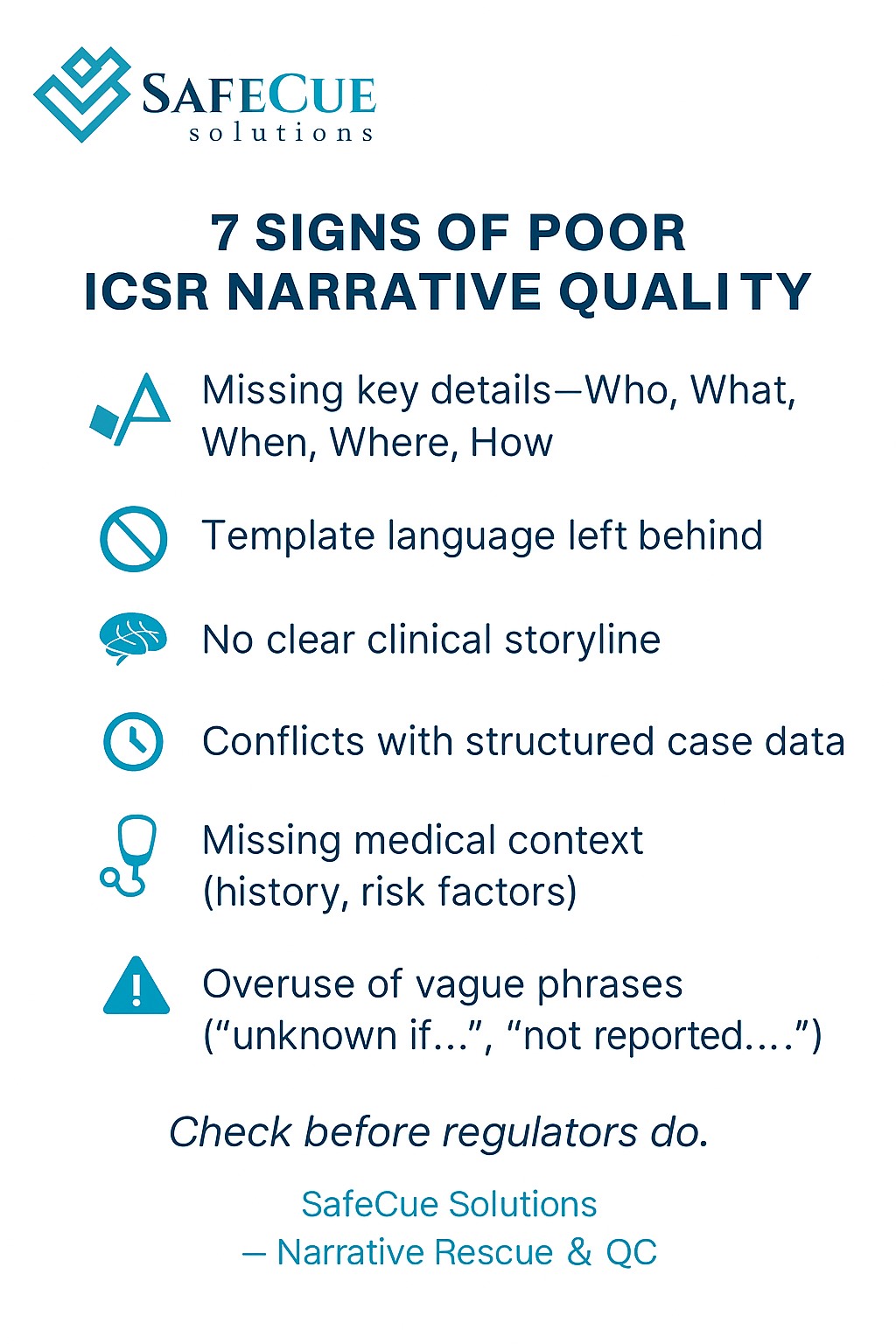
Regulatory inspections rarely fail because of a single missed deadline. More often, findings stem from patterns: inconsistencies in narratives, unclear medical rationale, incomplete temporal relationships, or misaligned coding that accumulates across cases.
Routine quality reviews help sponsors identify and correct these issues early—when remediation is straightforward and documentation remains clear. By contrast, attempting to “clean up” cases under audit pressure increases risk, resource strain, and regulatory exposure.
Clean Narratives Support Clean Data
ICSR narratives are more than summaries, they are the foundation of downstream safety activities. Poorly constructed or inconsistent narratives can compromise:
• Signal detection and trend analysis
• Aggregate safety reporting (DSURs, PSURs, PBRERs)
• Medical review and benefit–risk assessments
• Regulatory confidence in the sponsor’s safety system
Periodic quality reviews ensure that narratives are clinically coherent, logically structured, and aligned with source data. When narratives are sound, the data derived from them is more reliable, and more defensible.
Small Issues Become Big Findings…If Left Unchecked
Seemingly minor issues, copy-forward errors, inconsistent terminology, unclear causality rationale, or missing follow-up context, can quickly scale across dozens or hundreds of cases. Left unaddressed, these trends may surface during inspections as systemic weaknesses rather than isolated oversights.
A proactive review cadence allows sponsors to:
• Detect emerging trends in case quality
• Course-correct vendor or internal workflows
• Standardize narrative approaches across studies and products
• Document oversight and continuous improvement
Independent Review Strengthens Oversight
Periodic reviews conducted by an independent, medically trained team provide a valuable layer of oversight. Fresh eyes often identify risks that internal teams, under time pressure or deeply embedded in daily operations, may miss.
Independent quality assessments also demonstrate to regulators that the sponsor maintains active governance and control over its pharmacovigilance processes, even when work is outsourced.
Proactive Quality Is More Efficient Than Remediation
From a cost and resource perspective, periodic quality review is significantly more efficient than retrospective remediation. Addressing issues early reduces:
• Large-scale narrative rework
• Delays to aggregate reports
• Inspection-driven corrective action plans
• Reputational risk with regulators and partners
Most importantly, it allows safety teams to focus on what matters most: protecting patients and advancing development programs with confidence.
Building Audit-Ready Systems, Not Just Submissions
Audit readiness is not about perfection, it’s about consistency, traceability, and clinical integrity. Periodic case quality reviews help ensure that safety data reflects not only regulatory compliance, but thoughtful medical oversight.
At SafeCue Solutions, we believe that proactive quality review is one of the most effective tools sponsors have to safeguard their data, their timelines, and their credibility, long before an audit letter ever arrives.