When Pharmacovigilance Is an Afterthought: The Hidden Risks to Clinical Trials and Patients
In drug development, every decision affects both the science and the people behind it. But when pharmacovigilance (PV) is treated as an afterthought—rushed, under-resourced, or tacked on late in the process, the consequences can be far-reaching. It’s not just a matter of regulatory compliance. Patient safety, trial integrity, and a company’s reputation are all at stake.
At SafeCue Solutions, we’ve seen first-hand what can happen when PV isn’t given the attention it deserves from the start. Here’s what’s at risk.
1. Delayed Detection of Safety Signals
When PV processes are reactive instead of proactive, important safety signals may be missed or recognized too late.
Impact on Patients: Adverse events might go unreported or unassessed in time, exposing participants to unnecessary risk.
Impact on Trials: Late recognition of a safety issue can lead to protocol amendments, pauses, or full trial termination.
Example: A mild side effect left unmonitored early on may escalate into a pattern that halts enrollment months later.
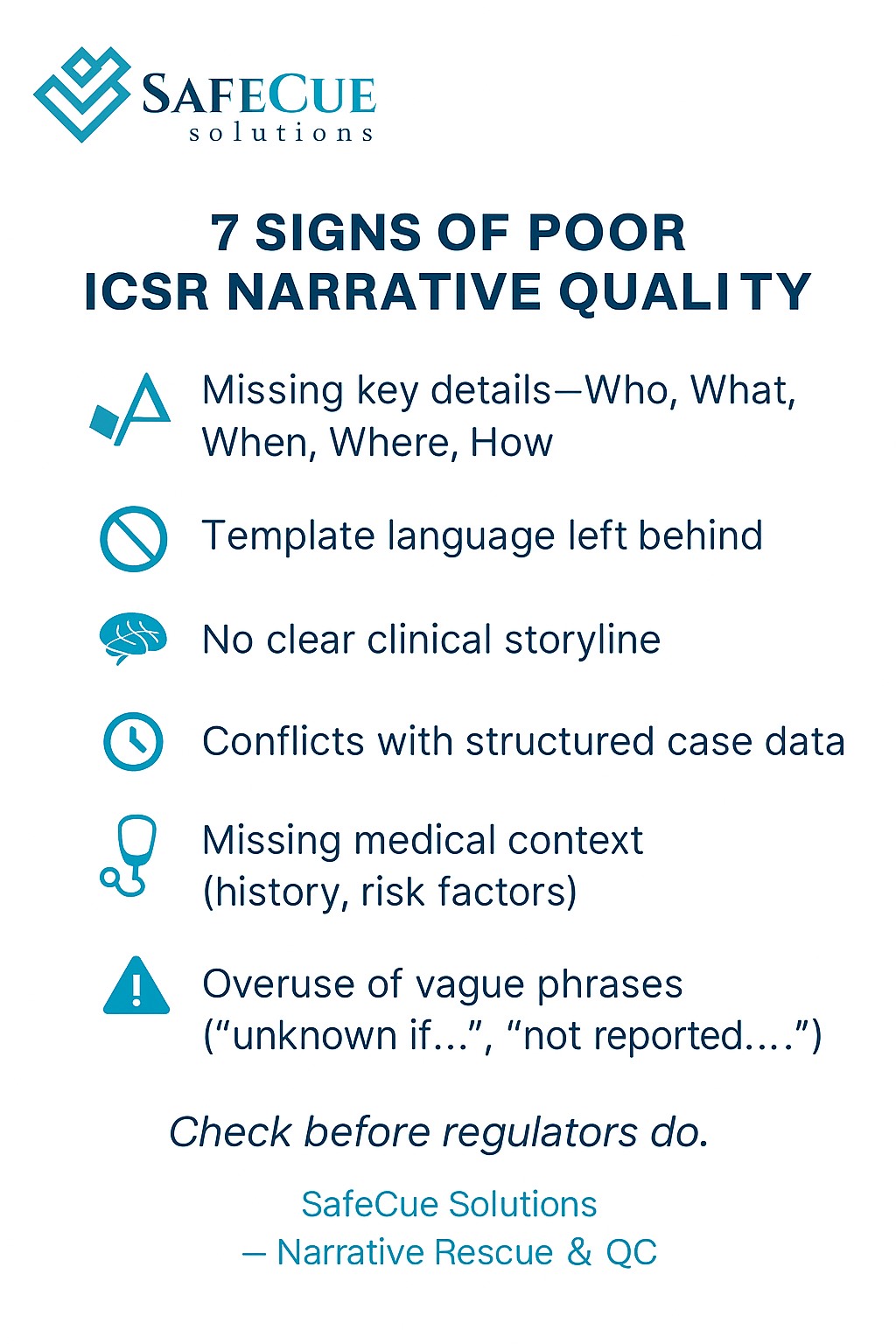
2. Incomplete or Poor-Quality Case Narratives
Narrative writing often gets rushed when PV is not prioritized until late in the trial.
Impact on Patients: Critical details about adverse events are lost, reducing the ability to fully assess risk/benefit.
Impact on Trials: Regulatory reviewers may question data integrity, slowing approvals or triggering costly follow-up requests.
3. Regulatory Non-Compliance and Inspection Findings
PV oversight is a regulatory expectation—not an optional box to tick.
Impact on Patients: Delayed or incomplete reporting can reduce confidence in the drug’s safety profile.
Impact on Trials: Findings during audits or inspections can lead to warning letters, fines, and trial delays.
4. Loss of Sponsor Credibility
A reactive PV approach undermines sponsor trustworthiness.
Impact on Patients: Recruitment becomes harder when patient communities lose trust.
Impact on Trials: Investors, CRO partners, and regulators may view the sponsor as high-risk, affecting funding and collaboration opportunities.
5. Financial and Timeline Setbacks
Correcting PV gaps late in the game is costly.
Impact on Patients: Trial delays mean patients wait longer for potentially life-changing treatments.
Impact on Trials: Budget overruns from rework, additional audits, or prolonged safety monitoring can derail development plans.
The Takeaway
Pharmacovigilance isn’t just a compliance requirement, it’s the foundation for ethical, effective, and credible clinical research. Building PV into your development plan from Day 1 ensures safety signals are caught early, narratives meet regulatory standards, and patients remain at the heart of the process.
At SafeCue Solutions, we specialize in ICSR narrative QC and rescue work for small biotech companies. We help sponsors avoid the pitfalls of last-minute PV fixes by ensuring safety data is complete, accurate, and audit-ready from the start.
💬 Let’s talk about how we can support your trial before PV becomes a problem.
#Pharmacovigilance #ClinicalTrials #PatientSafety #DrugDevelopment #Biotech #ICSR #NarrativeWriting #ClinicalResearch #SafetyReporting #PVCompliance #ClinicalTrialManagement #MedicalWriting #PVRescue #ClinicalDataIntegrity #RegulatoryCompliance #SafeCueSolutions